Digital educational program
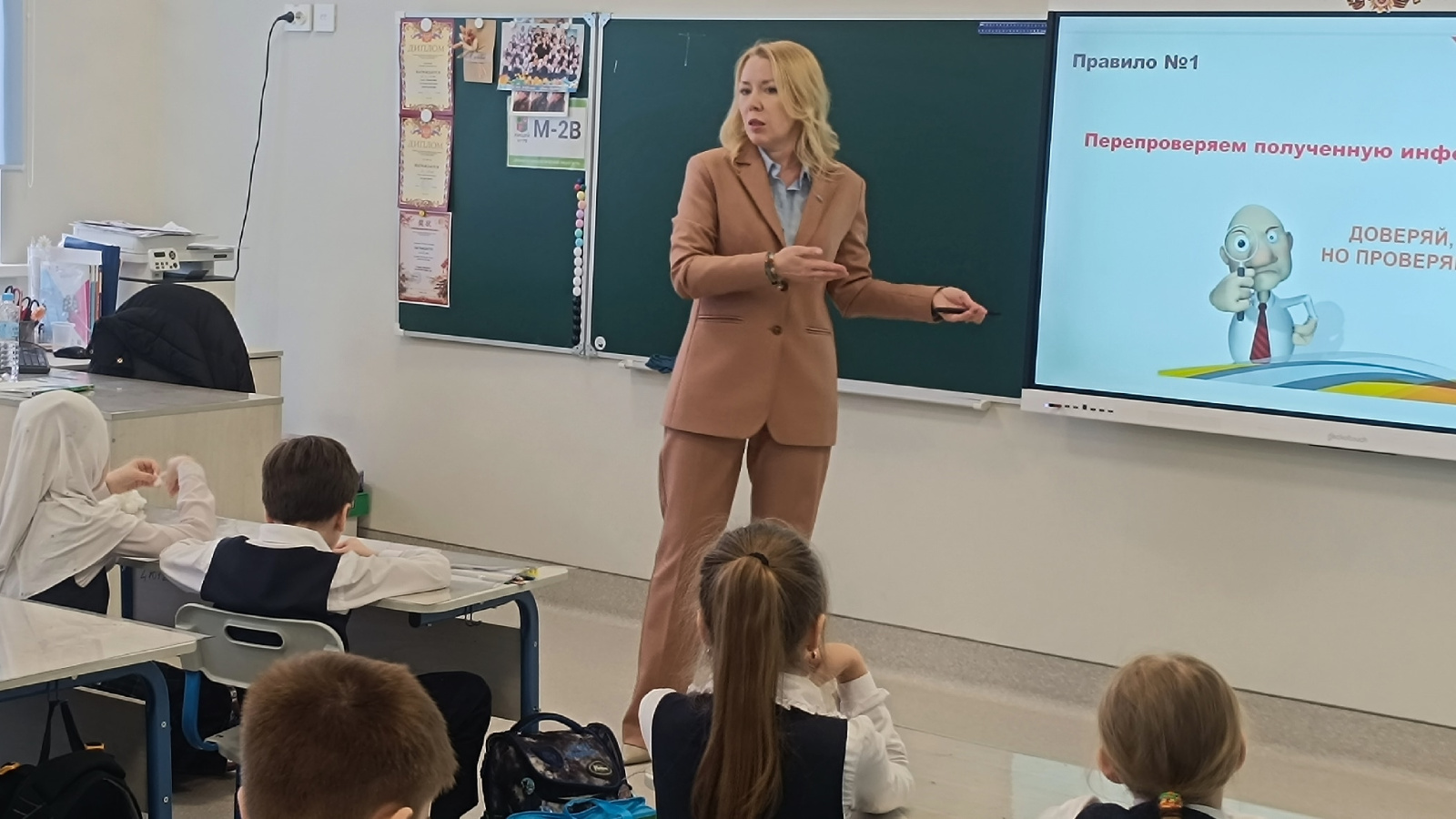
Today, Maria Krivenkova, Deputy Head of the Agency, conducted digital Literacy Lessons with younger students of Lyceum No. 79 in Kazan. These classes are part of the mandatory cycle of educational events for the authorities of the Digital Education project, which is being implemented within the framework of the national project "Data Economics" and the national goal "Technological Leadership".
The Ministry of Education of Russia and the Ministry of Finance of Russia, which are overseeing the project together with ANO Digital Economy and Kaspersky Lab, have prepared educational materials about current cyber threats that are accessible to children. For example, about how seemingly harmless gadgets can become a tool for cybercriminals, as well as about digital behavior on the web and in life, rules for creating and using passwords, and various Internet threats. Maria Krivenkova: "I was pleasantly surprised by the fact that elementary school students showed high awareness of this topic during the lesson and found answers to almost all questions on Internet security. This gives us confidence that the new generation will take precautions in the digital world."
Smart Home security and pet protection: Kaspersky Lab has released videos for the new season of the Digital Education Project
For the fourth year in a row, Kaspersky Lab has been participating in the All-Russian educational project "Digital Educational Program", which is being implemented as part of the national project "Data Economics" and the national goal "Technological Leadership". In the new season, the company, together with ANO Digital Economy, with the support of the Ministry of Education of Russia and the Ministry of Finance of Russia, have prepared two new training videos about current cyber threats. The first video tells you how to secure a smart home and protect pets using digital technology, and the second will teach you how to distinguish "harmful tips" on digital behavior from really working rules on cybersecurity. Educational videos and methodological materials for them are available on the digital Library website.The action takes place in the fictional city of Ocean City, one of its inhabitants is an aspiring journalist, Lina Rybka, who writes a column about digital threats to the Karasevsky IT company. In the first video, she was approached for help by octopus gamer Lelik, who had his home smart devices hacked. The technician started behaving strangely and his pet, Snail Bubble, got scared and ran away. Fortunately, she had a special tag for searching for missing animals, which helped to find her. After that, Lelik decided to find out how to secure a smart home. The second video is presented in the format of "harmful tips" on digital security. According to the story, a schoolboy, a sea turtle named Pasha, has read bad recommendations in one of the channels. For example, the author claimed that there is no need to update programs, because it only slows down the device and "eats up" traffic. As a result, Pasha had problems, and he contacted the editorial office – and Lina the fish released an exposure of harmful advice. Educational videos are intended for children from 6 years old, they are recommended to be watched together with parents and teachers. In addition to them, there are methodological materials for teachers – they help to integrate them more effectively into the learning process, use them in lessons and extracurricular activities, as well as at parent meetings.
"As part of the Digital Education project, we try to tell students about the cyber risks they face in their daily lives. For example, many homes have smart speakers, televisions, cameras, or other gadgets. From the tutorial video, young users will learn how to use them safely so as not to become a victim of intruders. An equally relevant topic is the protection of pets. According to our survey, one in three owners is afraid that their pet will get lost, for example, during a walk or a walk. Special solutions for finding lost pets, such as Kaspersky PetKa, help to reduce risks, and in the video we tell 2 about the principles of their work. And, of course, students need to be reminded of the basic rules of cybersecurity, as well as to teach them to carefully choose their sources of information," comments Andrey Sidenko, head of Kaspersky Lab's online security department.
"We see that cybersecurity issues are becoming more relevant in everyday life. The new season of the Digital Educational Program, implemented with the participation of Kaspersky Lab, is aimed at practical assistance to users: with the help of instructional videos, you can learn how to protect smart devices, secure the digital environment in the home, and learn how to distinguish unreliable advice from truly effective protection measures. This knowledge and skills are especially important in the context of the rapid development of digital technologies," comments Yulia Goryachkina, Director of Personnel for the Digital Economy at ANO Digital Economy. Digital Educational Program is an All–Russian educational project in the field of digital literacy, organized by ANO Digital Economy, the Ministry of Finance of Russia and the Ministry of Education of Russia. The project includes a series of educational animated videos and teaching materials for teachers who use clear examples to teach children and adults the basics of digital literacy and cybersecurity.
Videos from leading digital companies such as VK, the Contribution to the Future Charitable Foundation, SKB Kontur, Kaspersky Lab, Avito, Yandex, Rostelecom PJSC.